The Zine: Five Years of Hardluck Stories
In its final season, this was the zine’s front door — the place where readers learned there would be one last issue, and where the masthead promised what it always had: classic noir, dark, funny, shocking, and absolutely no compromise. It portrays Hardluck Stories at the end of its run.
How the Zine Worked
Hardluck Stories published quarterly, and almost every issue was built around two moving parts: a theme and a guest editor. The theme set the table — Psycho Noir, Femme Fatales, Western Noir, Bank Jobs, Borderland Noir, Crime in the City — and the guest editor picked the menu, reading submissions and selecting five to fourteen stories per issue. Nonfiction rounded out most issues: author interviews, book reviews, and essays on the craft and history of noir.
The result was a zine that never settled into a single house style. A Western Noir issue edited by Ed Gorman read nothing like the Weird Noir issue edited by Neddal Ayad, and that was the point. What the issues shared was a standard: stories had to be noir at heart, which meant characters in real trouble of their own making, prose with no fat on it, and endings that didn't flinch.
What the Themes Really Did
The themed-issue model looks like a marketing hook, but its real work was creative pressure. Handing a writer a constraint — Femme Fatales, Borderland Noir, a bank job — forced invention that an open call rarely produces; the best submissions treated the theme as a problem to outsmart rather than a box to fill. It also kept the zine from repeating itself, since each issue reset the terrain and asked its guest editor to hear the same genre in a different key. Readers noticed. A Hardluck issue was never a grab-bag of whatever came in over the transom; it was an argument about what one corner of noir could hold.
One Last Call
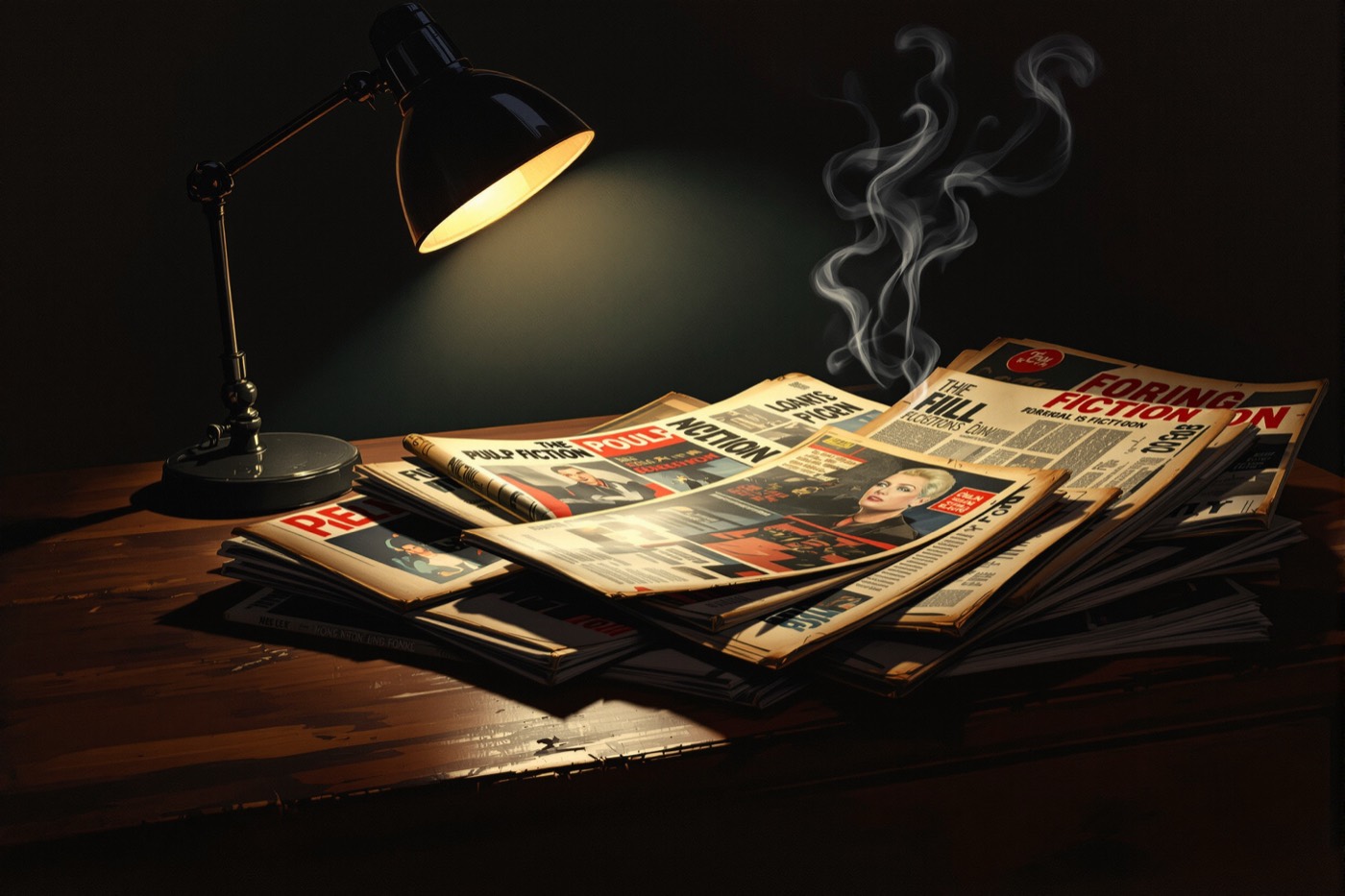
After five years, the zine announced it would shut down — but go out with a bang. The final issue's theme was 30s Pulp Noir, co-edited by Ed Gorman and Dave Zeltserman, with artwork by the incomparable Jean-Pierre Jacquet, the artist whose illustrations had given Hardluck its distinctive look through its later years. The final call for submissions asked writers to honor the traditions of the magazines that once numbered more than three hundred on American newsstands — everything from costumed-hero gothics to street-level hardboiled crime, as long as it was noir at heart. The resulting issue is indexed in the Archives under its working title, the last issue.
The Company It Kept
Hardluck Stories belonged to a remarkable generation of 2000s crime fiction web zines — an ecosystem that gave short hardboiled fiction a home when print markets were shrinking. Its peers and friendly rivals were zines remembered today by crime fiction historians and sites like CrimeReads: scrappy, editor-driven publications that paid little or nothing and printed some of the most vital short crime fiction of the decade. Within that company, Hardluck carved out a reputation for two things: the rotating guest-editor model, which no other zine ran as consistently, and the long interviews, which treated working crime novelists with a seriousness usually reserved for literary quarterlies.
The print digests supply a longer view of the same short form. Ellery Queen's Mystery Magazine, launched in 1941, marked its 85th anniversary in 2026 by inviting nonfiction articles, interviews, and art about the magazine for its September/October issue or blog. The invitation included fans and readers alongside historians and writers. That is a useful way to approach an anniversary: look at the reading as well as the writing.
EQMM's published tally lists 370 award nominations and 113 award-winning stories, across prizes including the Edgar, Agatha, Derringer, and Shamus. Those figures give the short form some scale without settling any argument about taste. A noir reader can still ask the harder questions of an individual story: what does the character want, what does the choice cost, and does the ending collect?
The Masthead Voice
The zine-era homepage carried blurbs for the editor's own breakout novel alongside zine announcements, and the mixture was characteristic: Hardluck never pretended to be a faceless institution. It was one editor's taste, argued for in public, four times a year. Writers praised the zine in the same breath as the editor's fiction — Ken Bruen called that fiction "pure magic of the blackest kind," and Allan Guthrie judged it "written with a rare maturity and confidence." The same sensibility chose every story the zine ever ran.
Reading the Zine Today
The complete issue index lives in the Archives, organized newest to oldest, with every story and essay credited. The editorial columns are collected under Hardluck Thoughts, and the people who shaped each issue are profiled on the Guest Editor page. For the zine's deepest cuts — the conversations with Ken Bruen and James Crumley — set aside a full evening. They've earned it.